
A well-used kitchen.
A well-fed table.
I like a kitchen that feels lived in. A loaf on the board, a cloth on the table, and room for one more.
Pull up a chair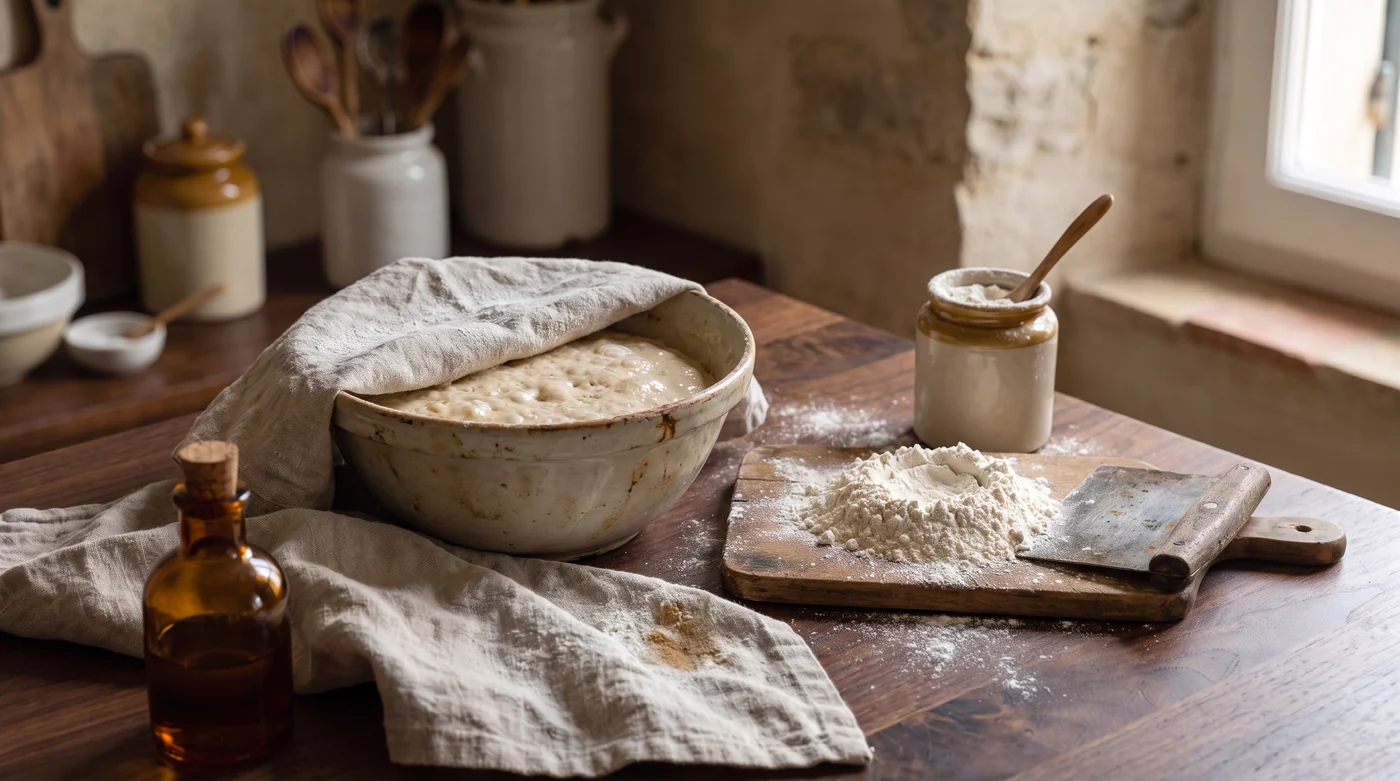
“The first slice.
A little butter.
Nothing much to add.”
Good food starts
with paying attention.
“I’m Petey, a Filipina living in Europe. I love to bake—especially focaccia. A loaf on the board, a little flour on the table, and something good to share: that’s the feeling I want to bring here.”
PeteyA little flour.
A rhythm of your own.
Work out a feeding by weight, keep a note of what you see, and make a calendar that fits your days.
Open your starter notebook ↗20 g starter
40 g flour
40 g water
Simple things,
worth knowing well.
Find the right tool for the task, a method worth practising, and a little more ease in the kitchen.
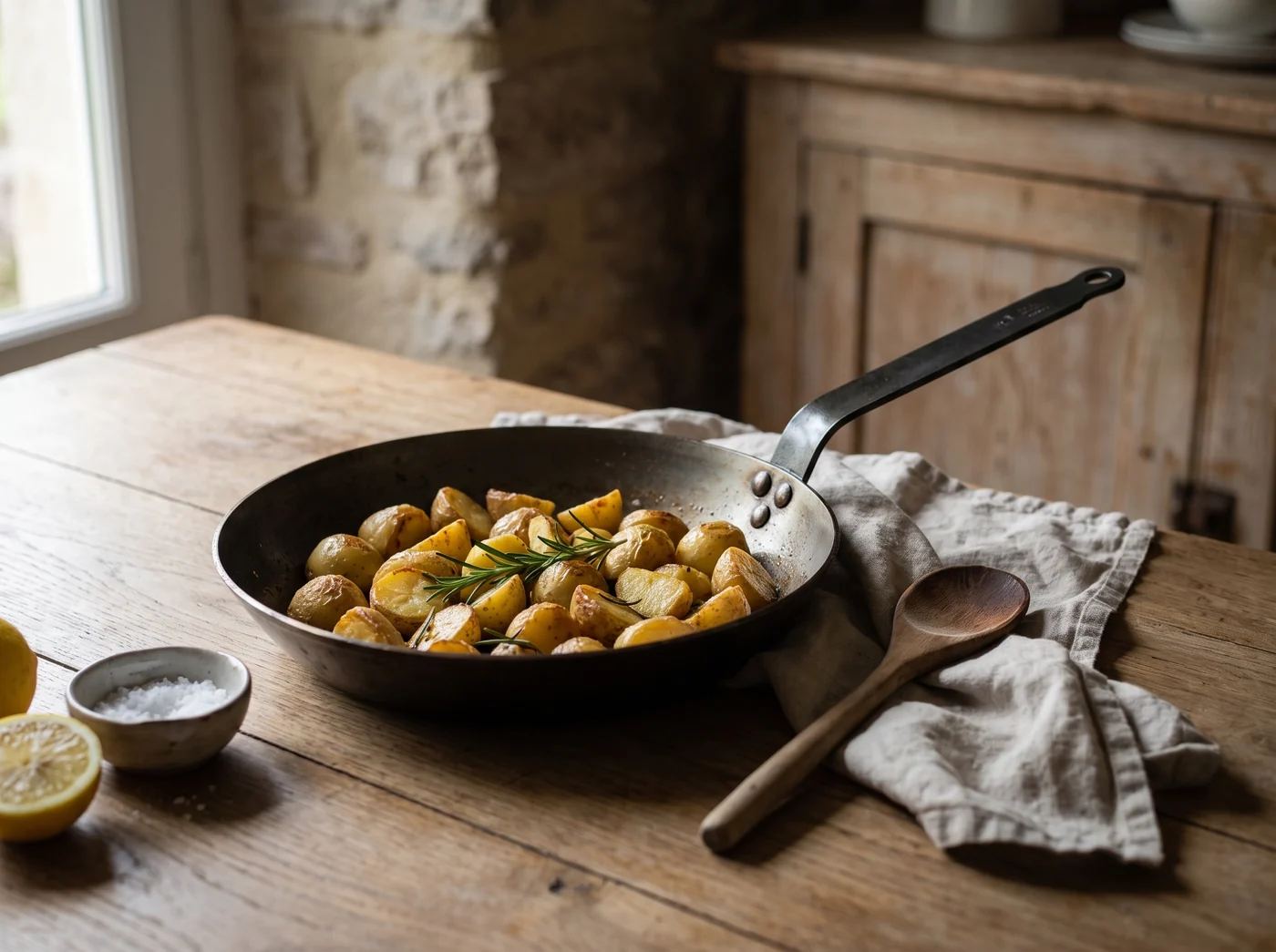
A pan. A purpose.
A place on the stove.
Shape, size and surface: get to know what your cookware can do.
Explore cookware ↗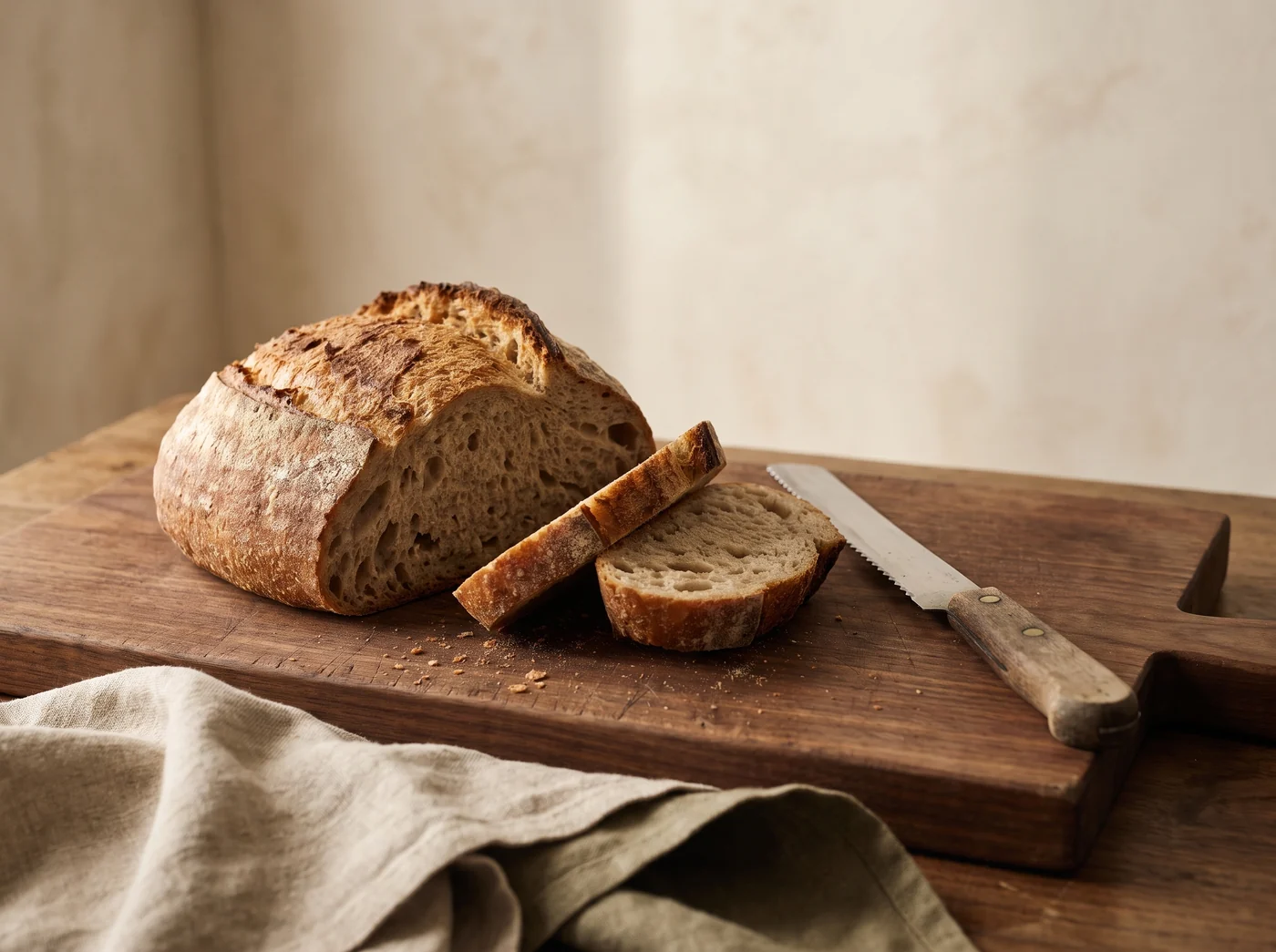
A little more
for the table.
Explore flour, water, oil and the ingredients that shape a baking formula.
Try Baking Composition ↗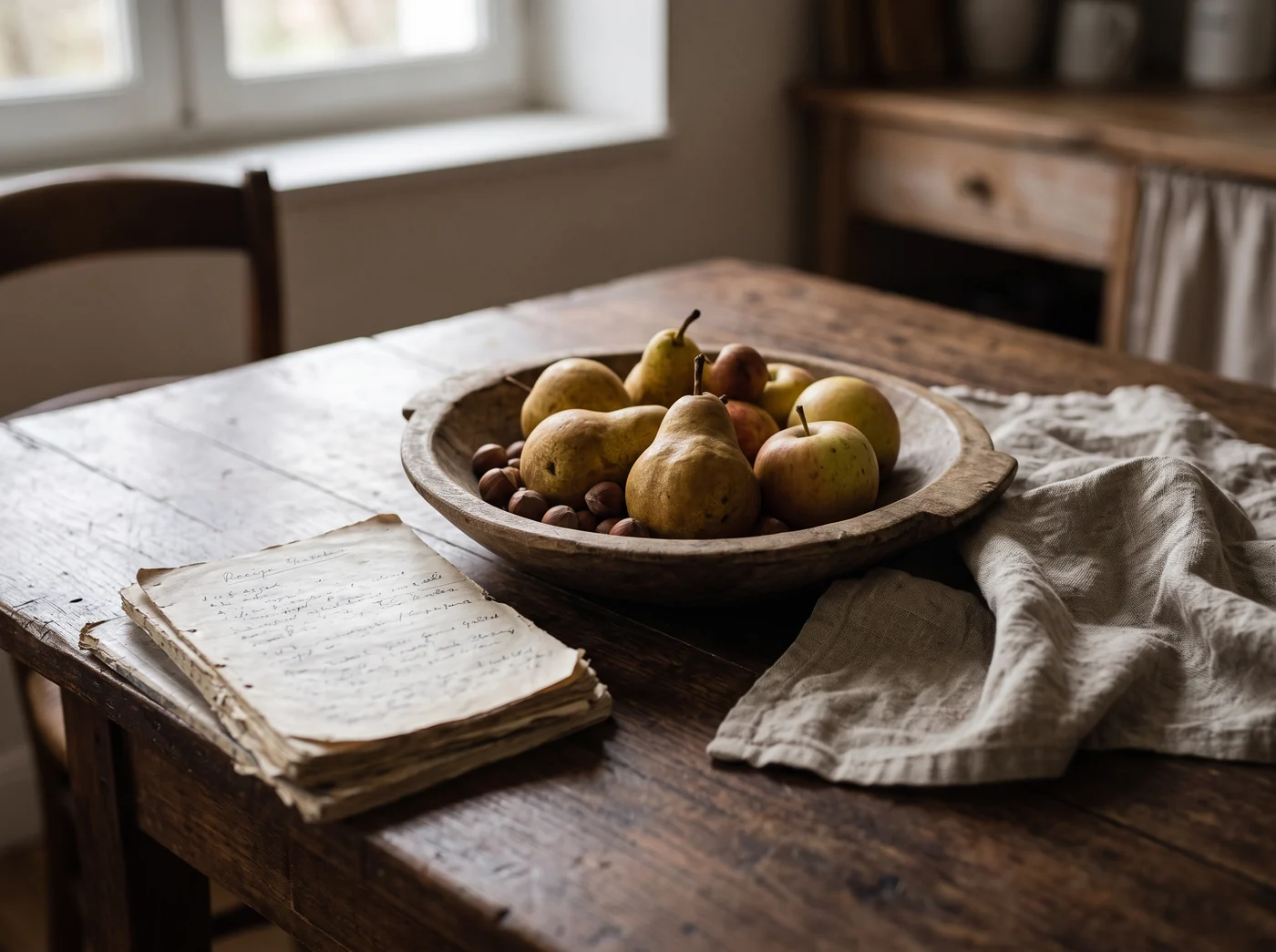
Start with
what’s at hand.
Seven subjects, from everyday preparation to cooking and baking.
Read the kitchen journal ↗A feeling for
what happens next.
Choose a technique. Find the setup, a useful observation and the tool that supports it.
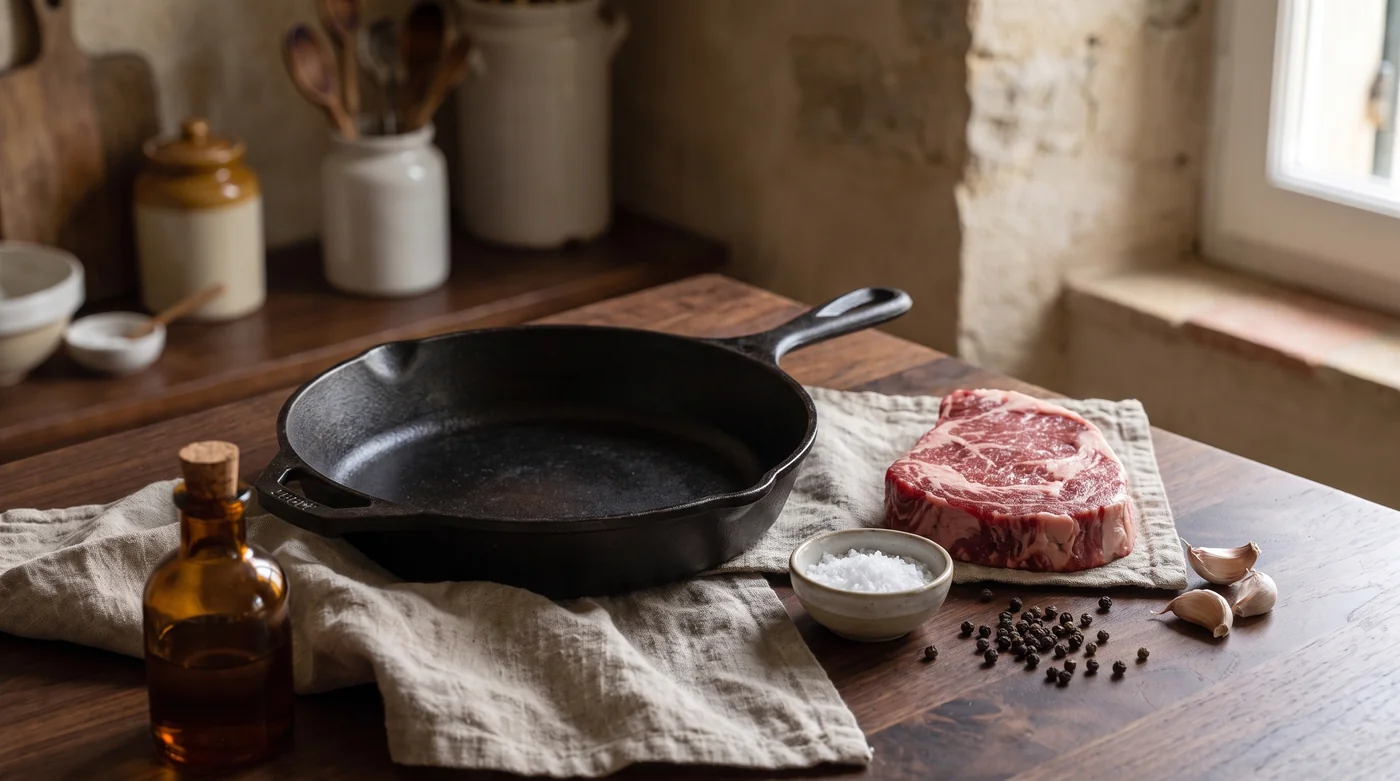
Sear
Bring food into contact with a hot cooking surface to develop browning. The useful question is how the surface is changing while the rest of the food cooks.
- Surface moisture and crowding affect contact with the pan.
- Watch the contacting side and the recipe’s cue for turning.
- Browning is a surface observation; check the centre as the food requires.
A little flour.
A little understanding.
Change a proportion and watch the weights settle into place. Learn what each ingredient brings, then keep the formula in your own notebook.
Explore what goes in ↗Deutsch: drei visuelle Backwerkzeuge ↗A few good places
to begin.
Seven connected guides, with useful tools and a route into the Technique Atlas.
Cookware
Choose pans by the meals you make, the space you have and the care you will actually give them.
↗02Prep tools
Knives, boards, scales and the small tools that make preparation easier to organise.
↗03Countertop cooking
A practical way to compare mixers and countertop appliances without filling every available surface.
↗04Cooking techniques
A kitchen reference for heat, movement and the practical cues that help you follow a method.
↗05Baking & bakeware
A home for focaccia, starter care, baking tools and careful work on gluten-free and vegan alternatives.
↗06Everyday cooking
Read recipes, plan the order of work and make practical changes without losing the method.
↗07Storage & preparation
Choose containers, plan preparation and keep a clear record of what belongs where.
↗Focaccia, flaky layers, and a little persistence.
Our baking notebook makes space for gluten-free, vegan, and combined alternatives. Each needs its own recipe development and a clear account of what changed.
Inside the baking notebook ↗A good place to begin.
Baker’s percentage, without the mystery.
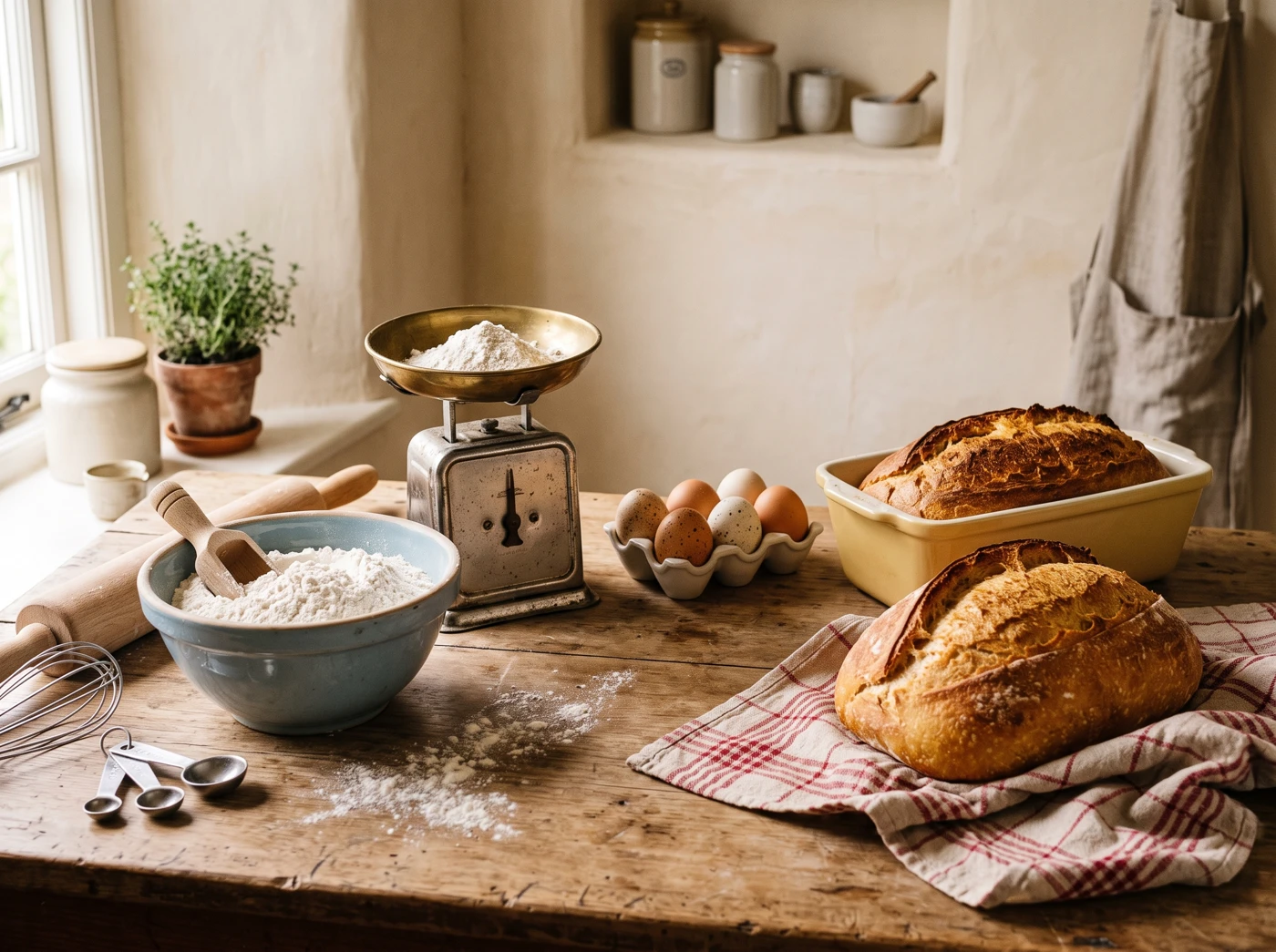
Why flour is always 100%, how to turn the percentages into grams and what hydration numbers leave out.
Read the guide ↗
Two different changes. One careful notebook.
How to frame gluten-free, vegan and combined baking projects without promising a universal substitution.
Read the guide ↗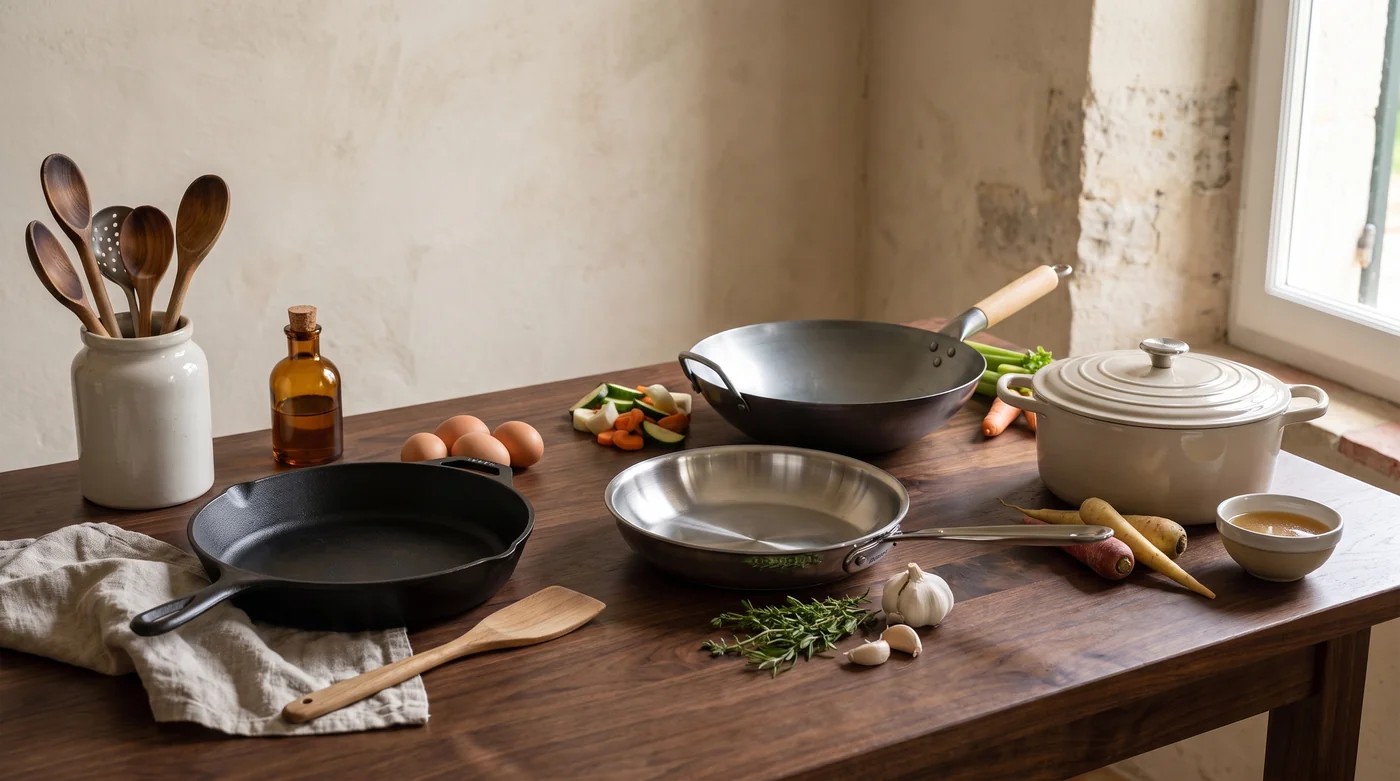
Choose a first pan around a real meal.
A buying worksheet for size, handles, surface and care, before comparing a wall of cookware.
Read the guide ↗Choose around the job.
A short research list for weighing, baking and checking temperature, with original manufacturer sources and practical limits.
See the equipment shelf ↗
There is always
another good teacher.
Watch a bread method, follow a starter guide, and keep your own observations beside the recipe.
Open the wider kitchen shelf ↗