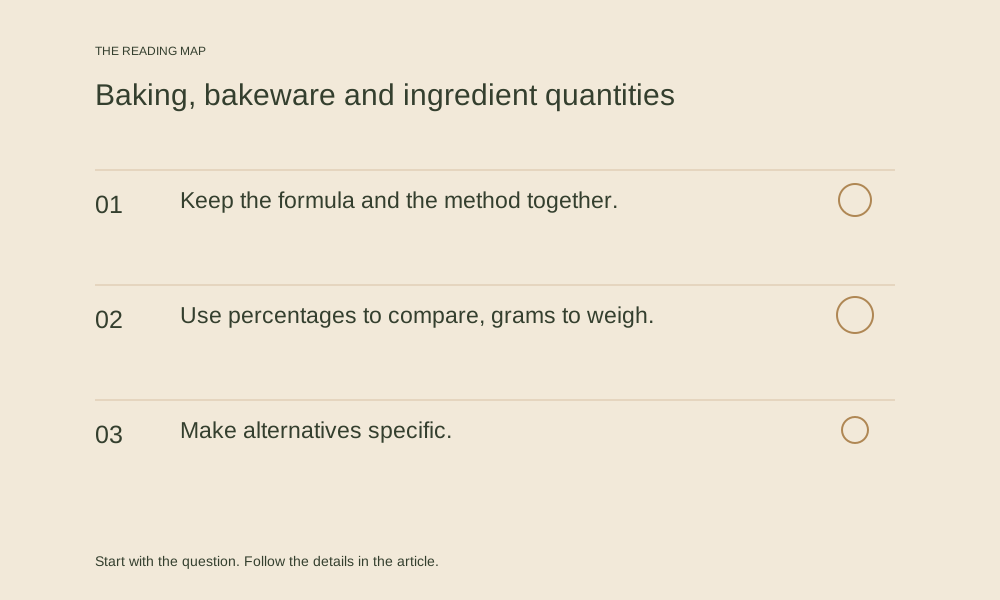
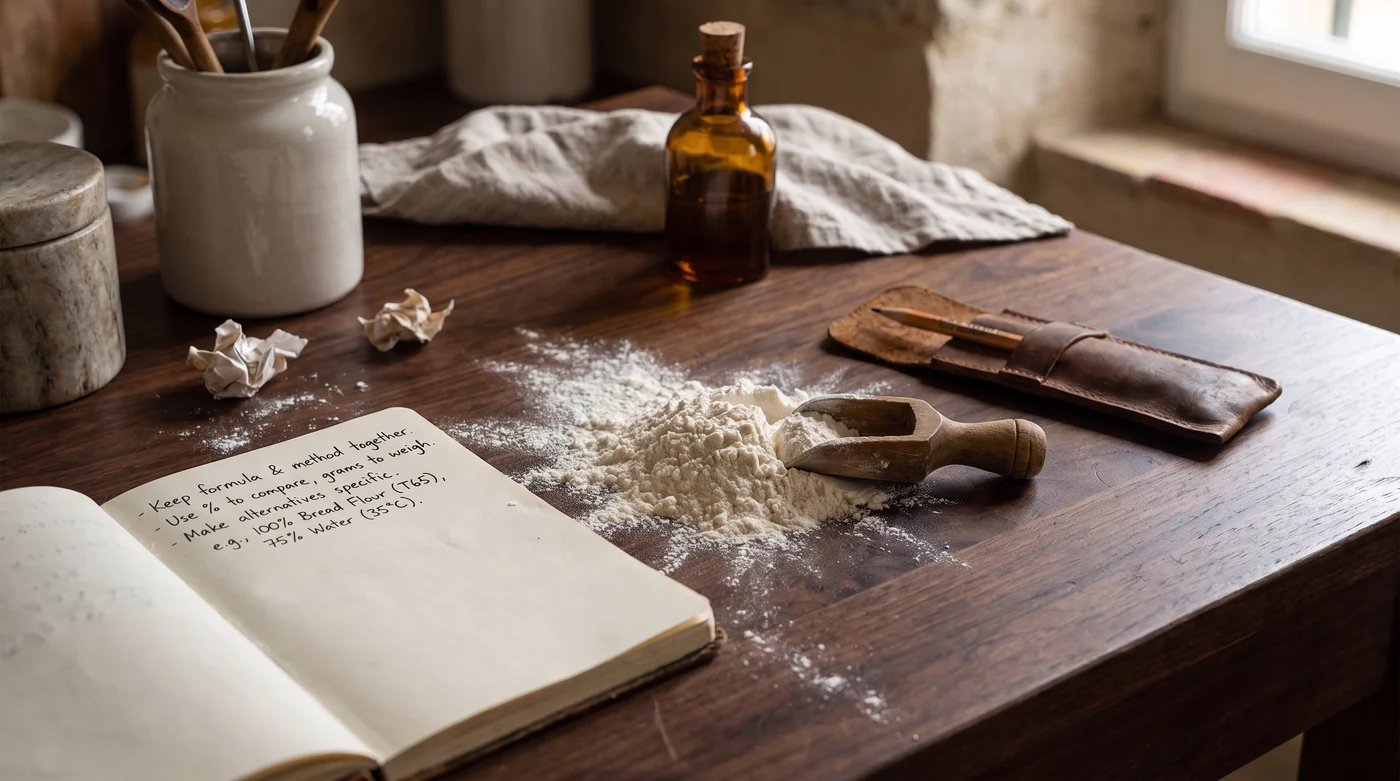
Keep the formula and the method together.
A list of percentages describes quantities, not a complete bake. The flour, mixing sequence, fermentation, pan and oven all belong in the same notebook. Start with a complete recipe from an identified source and record the version you actually make. Save the ingredient labels when a flour blend or substitute is part of the result.
Petey loves baking and focaccia, and that interest shapes this part of Stirred Daily. Our tools help organise the arithmetic and observations. They do not mean a displayed formula has been baked, tasted or approved by Petey.
Use percentages to compare, grams to weigh.
Baker’s percentages put total flour at 100 and express other ingredient weights against it. This makes two differently sized mixtures easier to compare. The Baking Composition tool shows the grams beside each percentage and a separate picture of each ingredient’s share of the total mixture.
Those two percentages have different denominators. The flour is always 100% in the baker’s table, but it will be less than 100% of the finished mixture’s weight. Added water is shown separately from milk and egg so the tool does not quietly count every liquid ingredient as pure water.
Make alternatives specific.
Gluten-free and vegan are different requirements. A recipe may address either, both or neither. Label the actual version, the exact flour blend and the replacements used. A successful egg-free wheat loaf does not demonstrate that removing gluten will work in the same formula.
For demanding bakes, begin with an independently developed recipe in the category you need. Use the role explorer to understand the question a substitution raises. Keep any claims of “tested” or “works with any flour” out of the notebook until there is evidence for the exact claim.
Make the pan part of the formula record.
Measure the interior at the base, note the depth and record the material. Our pan comparison calculates an area ratio for a comparable fill depth; it cannot tell you a universal new baking time. The shape, surface and recipe still need judgement.
Keep starter care in its own log. A feeding calculator can tell you the weights in a ratio. Your observations tell you how that starter behaved in your kitchen. The calendar exports planned check-ins, leaving the timing under your control.
Take this to the kitchen.
Open the Baking Composition tool ↗
At the source
Original references consulted for this research edition. Manufacturer statements describe the named product; they are not our own test results.