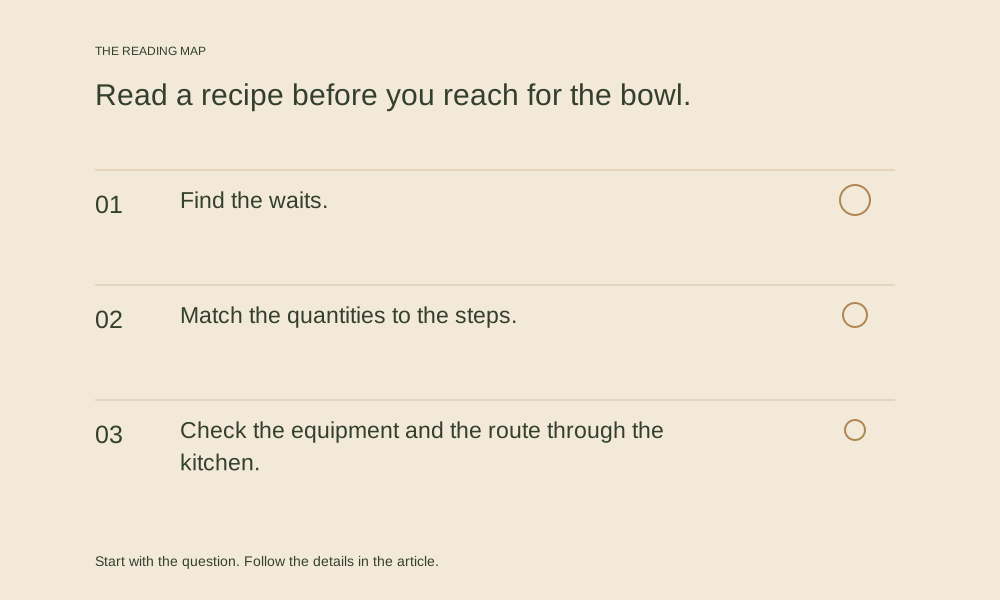

Find the waits.
Read the full method and circle the pauses: marinating, chilling, resting, proving or cooling. Write the serving time and work backwards. Active time is only one part of the plan. If a recipe needs a long wait that will not fit today, choosing another recipe is often easier than compressing a process you have not tried.
Look for ingredients that need to arrive in a particular state. An ingredient may be melted, softened, drained, cooled, toasted or cut before the first numbered step. Include that preparation in the schedule instead of discovering it halfway through mixing.
Match the quantities to the steps.
Mark ingredients that are divided and find each use. Keep the order of additions clear. A total amount in the ingredient list does not always mean all of it belongs in the first bowl. If a recipe specifies weight and volume alternatives, use one consistent approach rather than switching between them without checking.
For a scaled batch, write the new amounts on a separate sheet and retain the original. Keep a tally of any rounding or substitution. That protects the recipe from accidental changes and makes a useful record for the next attempt.
Check the equipment and the route through the kitchen.
Find every pan, bowl and appliance mentioned in the method. Check the pan dimensions and any required capacity. Notice whether the same tool is needed again and whether it must be cleaned first. Set aside the equipment for the final steps so that serving is not delayed by searching.
Read any relevant appliance and cookware restrictions. A recipe’s method does not override the instructions for the equipment you own. If a required technique or vessel is unfamiliar, use the atlas and equipment guides to understand the job before improvising.
Identify what tells you to move on.
Useful instructions combine a method with an observation: a mixture becomes uniform, a dough changes handling, a surface browns. Keep those cues beside the stated time. For food-safety decisions, follow the required measurements and appropriate official guidance rather than relying on appearance alone.
After cooking, keep one short note with the source: what changed, what you observed and what you would repeat. A clear record of a real attempt is more valuable than a confident story invented after the fact. That is the standard we want for Stirred Daily’s own recipe development too.
Take this to the kitchen.
At the source
Original references consulted for this research edition. Manufacturer statements describe the named product; they are not our own test results.