
The journal
Why is my bread sticking to the parchment paper?
Check the actual parchment, recipe temperature and release method when bread sticks. Follow product heat limits and avoid treating charred paper as safe to reuse.
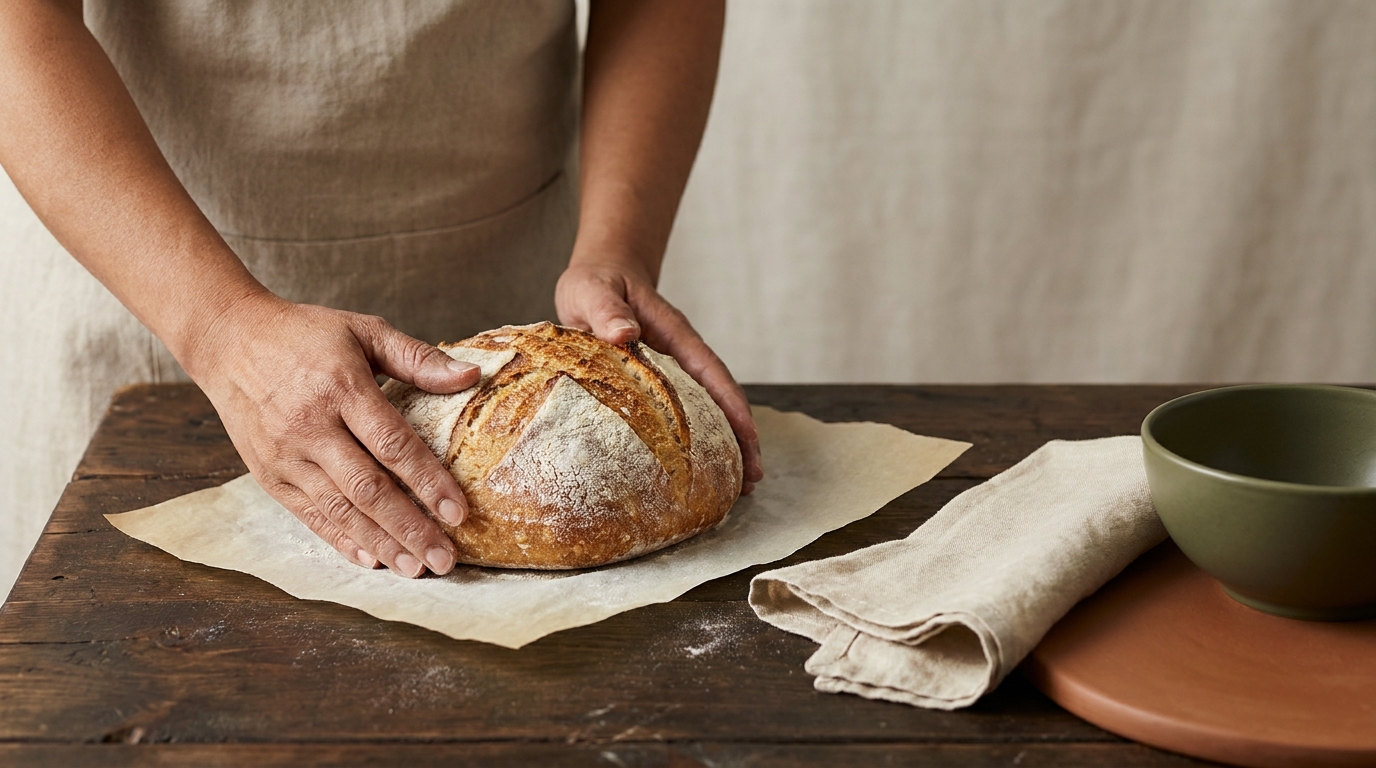
If bread sticks to parchment, first check that it is baking parchment rather than wax paper, that the product is suitable for the recipe temperature, and that the bread is baked as directed. Wet dough, sticky additions and differences between liners can affect release. Do not solve sticking by exceeding the paper’s stated temperature limit.
Check the liner before changing the dough
Read the package and identify its intended use. Parchment is not interchangeable with every kitchen paper. Reynolds’ parchment guidance gives its products a 425°F conventional-oven limit and warns against flames, oven surfaces and a broiling unit. Another brand may have different instructions; use the limit on the actual package.
If a recipe uses a hotter oven than your paper permits, choose a supported liner or a recipe-appropriate pan preparation that is compatible with the temperature. Trimming the edges does not make a lower-rated paper safe at a higher setting. Avoid exposed wax paper in place of parchment.
Follow the recipe’s release method
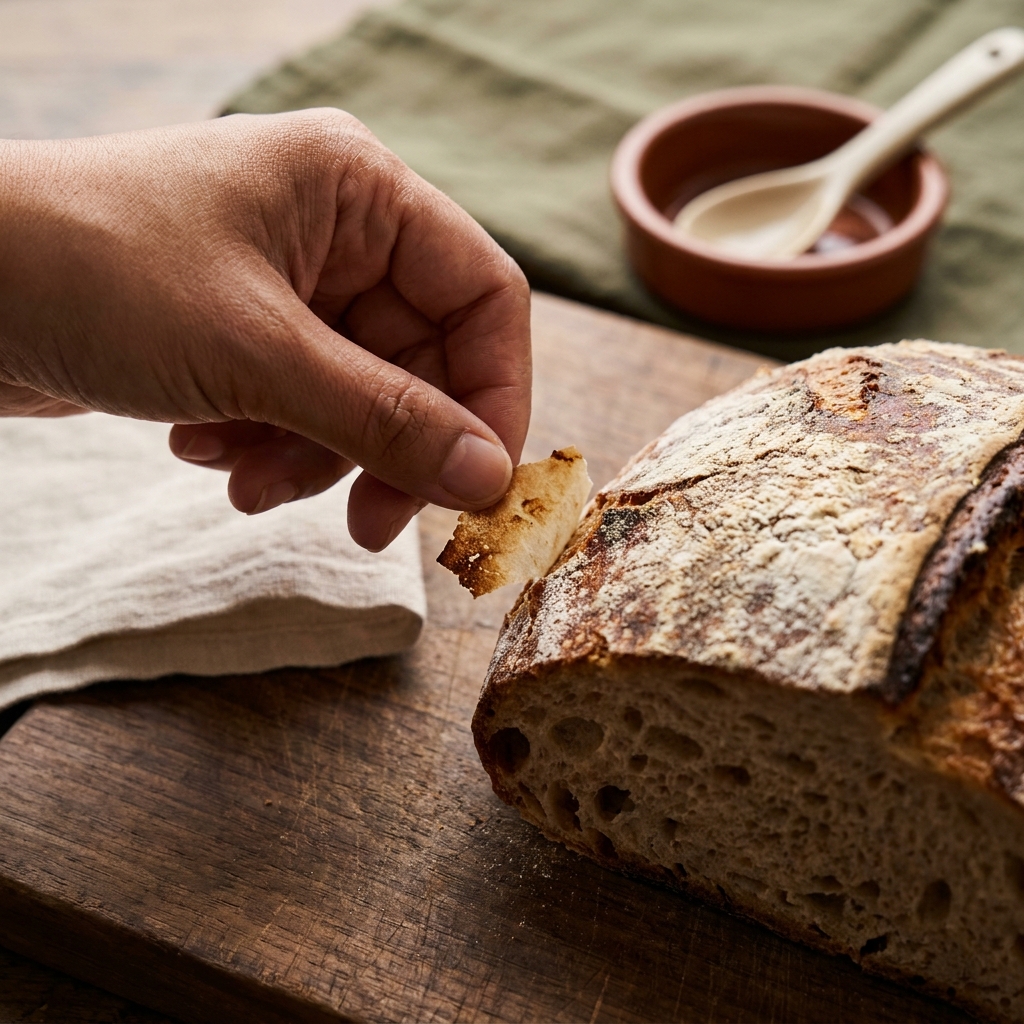
Some bread recipes call for a lightly oiled pan or greased parchment, particularly for sticky doughs such as focaccia. King Arthur’s pan-preparation discussion explains that parchment can still benefit from grease in particular recipes. That does not mean every loaf needs an arbitrary layer of oil, semolina and rice flour together.
Use the intended amount and type of grease or dusting in the recipe. If you add loose flour or meal to a hot tray, follow that recipe and monitor it rather than assuming it cannot scorch. Check that the dough has reached the recipe’s doneness cues before trying to lift it.
Remove the paper without damaging the loaf
Let the bread set and cool according to the recipe. When it is safe to handle, support the loaf and test a small edge of paper. If it releases cleanly, peel gently rather than pulling against an unsupported soft crust. Do not apply a warm-cake release instruction to every bread automatically.
If paper remains bonded to the loaf, avoid scraping paper fragments into the serving portion. Review the liner, dough and baking process before the next batch. A sticking problem alone does not establish one cause, and a darker sheet is not a reliable thermometer.
Stop if the paper is damaged
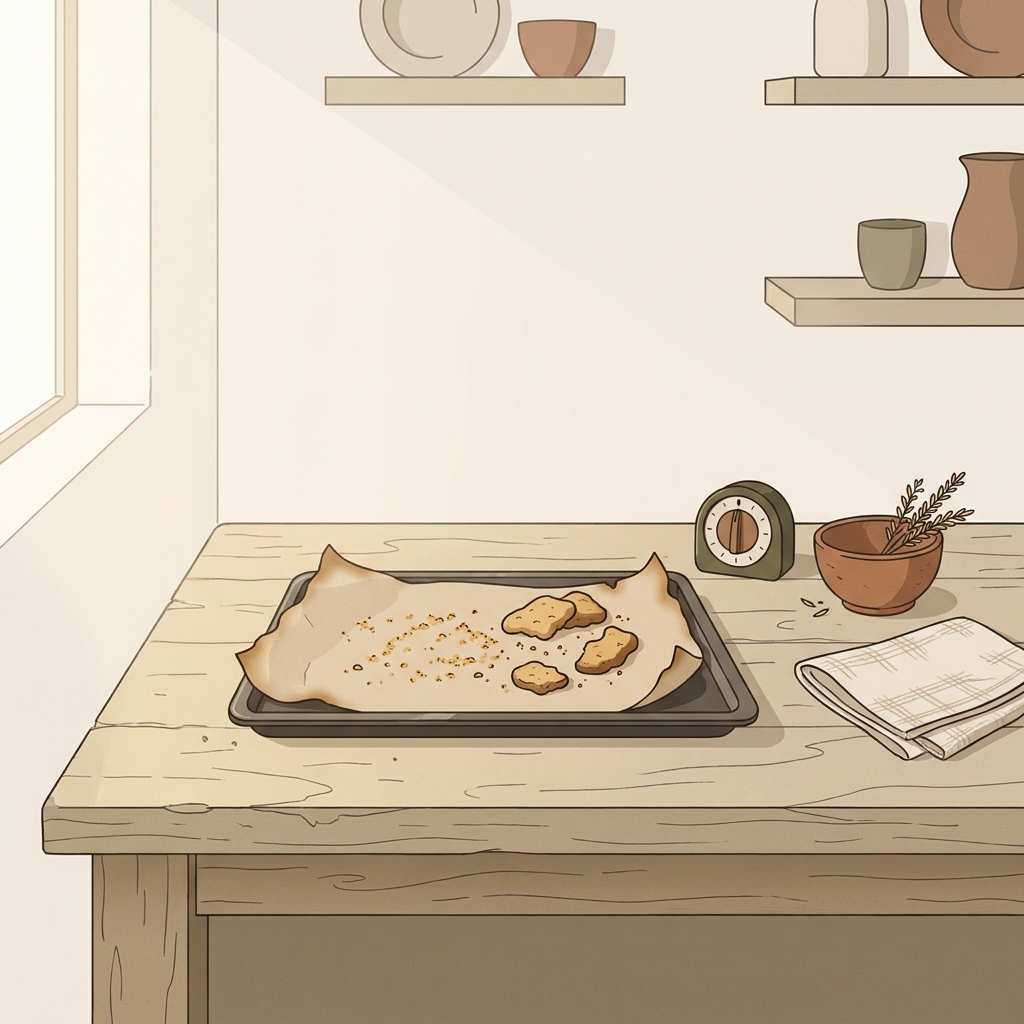
Do not treat visible charring as permission to ignore the package limit or keep reusing a damaged liner. Follow the maker’s reuse advice, discarding paper that is brittle, crumbling or otherwise unsuitable. If paper smokes or burns, stop using that setup and follow the appliance’s safety instructions.
Keep a short note of the recipe, liner brand, oven setting and result. Change one supported preparation step on the next bake. That is more useful than repeatedly raising the heat or adding several new release agents without knowing which change helped.
Put this into practice
Compare the actual parchment package limit with the recipe’s oven setting before baking again. If they conflict, choose a supported liner or preparation method instead of trimming paper and assuming that changes its heat rating.
Before you start
Related kitchen skills

Optional equipment for this guide
Choose parchment only after comparing the recipe temperature with the limit on the exact package. Change the supported liner or preparation method if they do not match.
As an Amazon Associate I earn from qualifying purchases. These are researched options, not hands-on test results. Check the exact size or model, current price and availability on Amazon.
| Product option | Fit and limits to check | Retailer |
|---|---|---|
| Product imageReynolds Kitchens Stay Flat parchment, 45 sq ft | The listing specifies a 425°F limit. Check the actual package and recipe temperature; do not use a lower-rated paper for hotter bread baking or under a broiler. | View on Amazon |