
The journal
Pasta water keeps boiling over? Do this
Reduce or turn off heat if pasta foam climbs, keep clear of steam and use an uncovered pot with enough room. Plan a larger pot for the next batch rather than handling a boiling one.

Turn the heat down as soon as the pot reaches a rolling boil, leave the lid off, and use a larger pot for the next batch so there is room above the water. Stir when you add pasta and anytime foam climbs.
If foam is already spilling, reduce or turn off the burner and keep clear of hot water and steam. Lift any lid away from your face with suitable protection. Let the situation settle before dealing with a spill according to the appliance instructions; do not carry a full boiling pot across the kitchen as an immediate fix.
Why it boils over and the immediate fix
Pasta releases starch that creates a foamy layer. When that foam stacks up faster than it can pop, it spills. The fastest fix is simple: reduce the burner until you have an active, steady boil rather than a furious one, and keep the lid off so steam can escape. If foam still rises, stir a few times to break it and knock it back down.
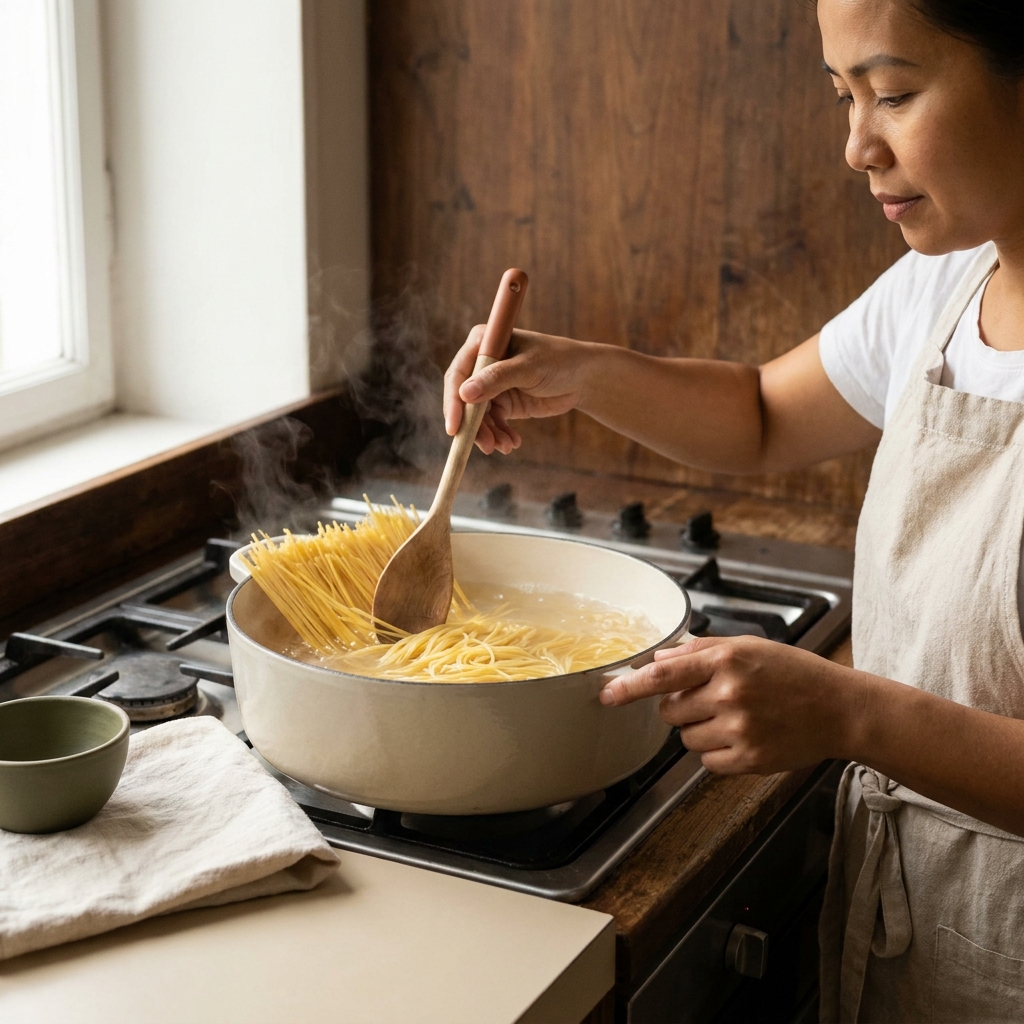
The National Pasta Association’s cooking guide recommends enough water and room for the pasta, occasional stirring and following the package’s cooking time. Adjust the burner to maintain the required boil without letting foam escape.
Set up your pot so it won’t boil over
- Use a larger pot than you think you need. The extra headspace gives foam somewhere to go before it reaches the rim.
- Leave the lid off after the water comes to a boil. Trapped steam and vigorous bubbles push foam higher.
- Bring water to a boil, salt it, then add pasta. Once it returns to a boil, turn the heat down to maintain a steady boil, not a raging one. If you’re unsure what gentle vs vigorous looks like, see our guide to recognizing a simmer vs a boil: How to tell if it's simmering (not boiling).
During cooking: what to watch and do
- Stir right after adding pasta, then occasionally. This disperses starch and breaks the surface foam.
- Adjust the burner as needed. If foam climbs, a small nudge down often solves it; nudge back up if the boil weakens too much.
- Watch for persistent foam. Reduce or turn off heat as needed; do not reach toward a hot rim to spread fat while the pot is boiling.
Use heat control rather than rim tricks
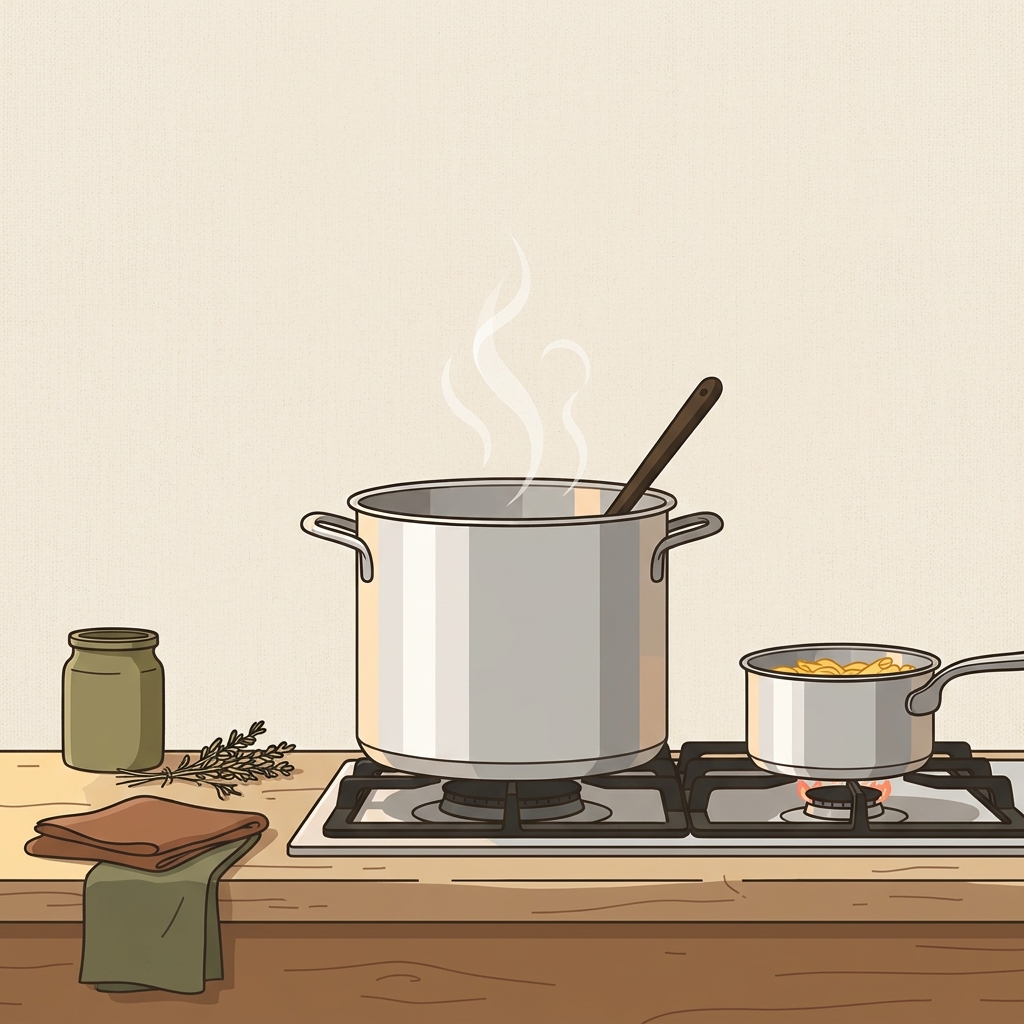
- Heat control: If foam surges, briefly lower the heat to calm it, stir, then bring it back to a steady boil.
Troubleshooting if it keeps happening
- Pot still too small: Upsize the pot or cook slightly less pasta per batch.
- Heat too high: A constant, controlled boil cooks pasta just as well and keeps foam manageable.
- Not stirring enough: Early, occasional stirring prevents clumps that shed extra starch.
Related reading
Put this into practice
Choose a pot with room for the cooking process and stay with it while adjusting the boil. If foam rises, reduce the heat as the guide describes; a spoon across the rim is not a reason to leave a boiling pot unattended.
Stop pasta boil-overs: quick checklist