
The journal
How to whip butter without a mixer?
A practical hand method for whipping softened butter, with texture cues, a distinction from creaming sugar and a linked honey-butter alternative.
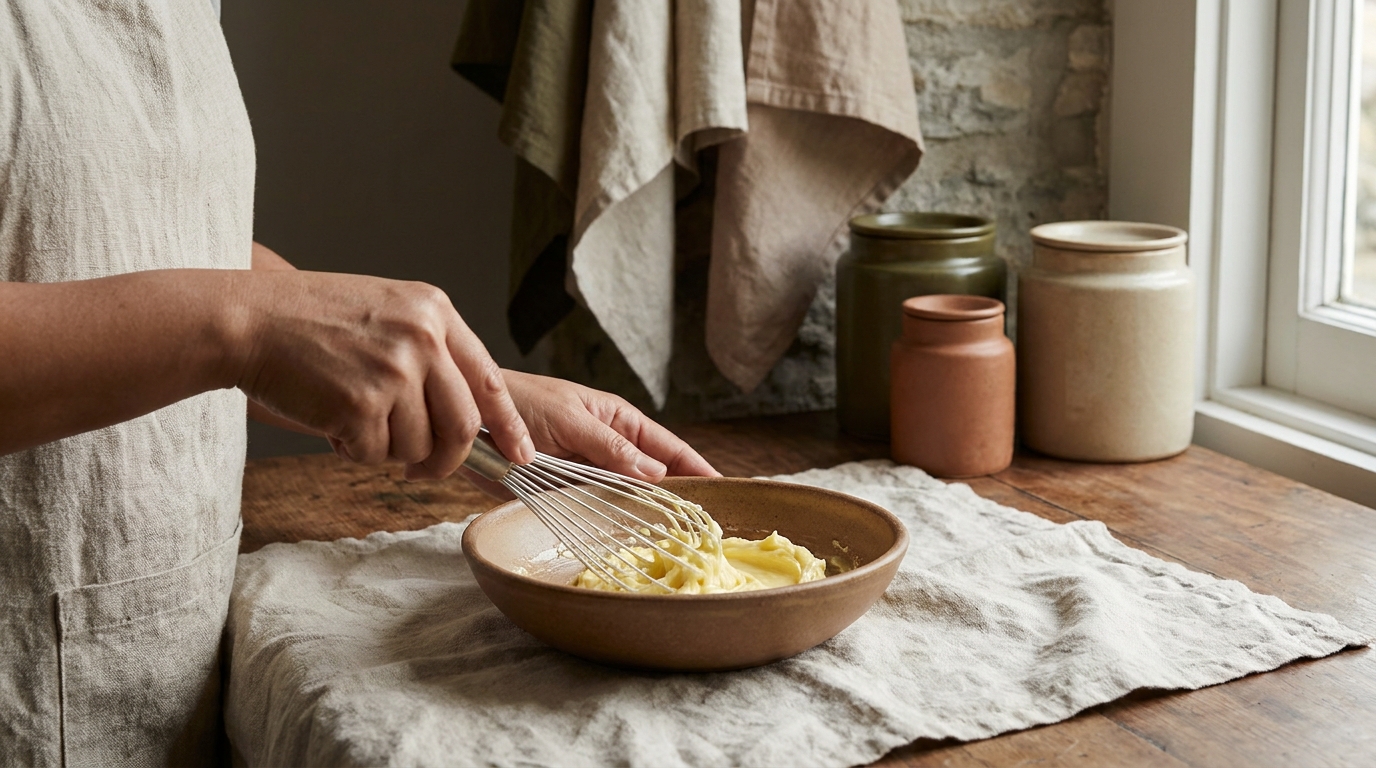
Yes. Start with softened (but not greasy) butter and whisk it vigorously by hand until it looks paler and fluffy. This aerates the butter enough for spreadable results. This is different from creaming butter with sugar, which relies on sugar crystals to build a fine network of bubbles for baking (see the King Arthur Baking explainer: Creaming butter and sugar: How to get it right).
What you need and how to prep the butter
- Tool: Use a balloon whisk if you can work the softened butter comfortably; a sturdy fork or wooden spoon can help mash a small amount first.
- Bowl: Use a medium bowl with space to lift and fold as you whisk.
- Butter texture: Soften until you can press a gentle indent with a finger; it should feel cool, not oily or shiny. Butter that is too cold won’t trap much air; too warm turns greasy and collapses (see King Arthur Baking).
Step-by-step: Whip butter by hand
- Cut 1 stick (113 g) softened butter into small pieces and add to the bowl.
- Smash and smear the butter against the bowl with a spoon or fork to break it down evenly.
- Switch to a whisk and beat in quick, energetic strokes, lifting the butter to fold in air. Scrape the bowl frequently.
- Watch visual cues: stop when the butter looks noticeably paler and softly billowy. If it starts to look shiny/greasy, it’s too warm; chill briefly, then continue. For small batches, hand-whisking often takes several minutes, and Savoring the Good suggests 5 to 7 minutes for its hand-whisk method; treat that as a guide rather than a promise, depending on amount and temperature (Savoring the Good).
How whipping butter differs from creaming butter with sugar
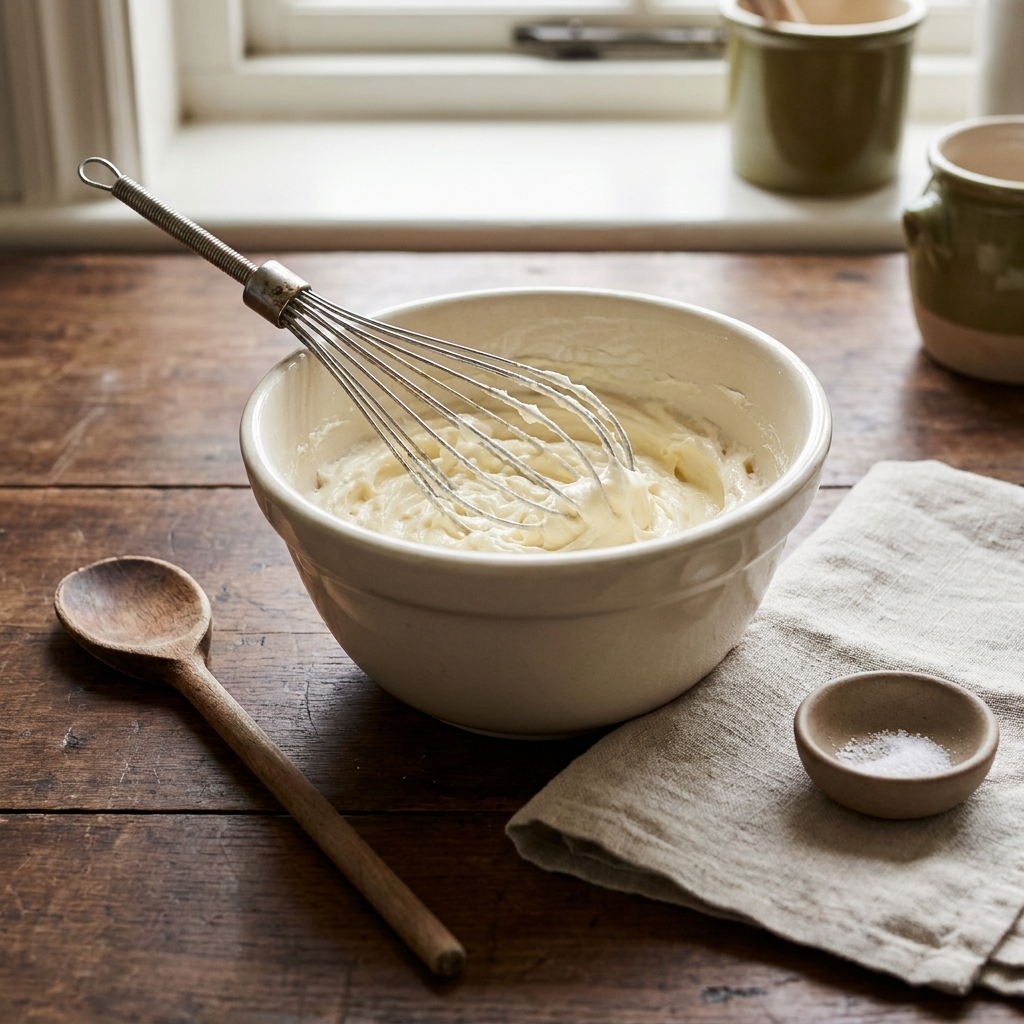
Whipping plain butter introduces air directly into fat for a lighter, spreadable texture. Creaming for baking uses sugar to punch tiny holes in properly softened butter, building a fine bubble network that helps capture leavening gases. Signs and consequences:
- Too cold: the butter remains firm or lumpy and is hard to work.
- Too warm: becomes wet/greasy; bubbles collapse.
- Useful cues: softened, aerated butter should be easier to work and look lighter; whiteness alone is not a universal endpoint. The cake consequences in the linked guide concern butter creamed with sugar, not a test of plain whipped butter (King Arthur Baking).
If you need a deeper dive into creaming for cakes and cookies, read King Arthur’s step-by-step with photos: Creaming butter and sugar: How to get it right.
Related technique read: Why fold instead of stir? A practical guide for lighter bakes.
Plain whipped butter and honey butter are different preparations
No liquid is required for the plain-butter method above. If you want a sweet spread, Tutti Dolci’s honey-butter recipe uses warm honey and softened butter in a separate hand-whisked preparation. Follow that recipe for its quantities and handling; its partly melted mixture is not evidence that adding warm liquid improves aeration in plain butter.
When the jar method applies (and when it doesn’t)
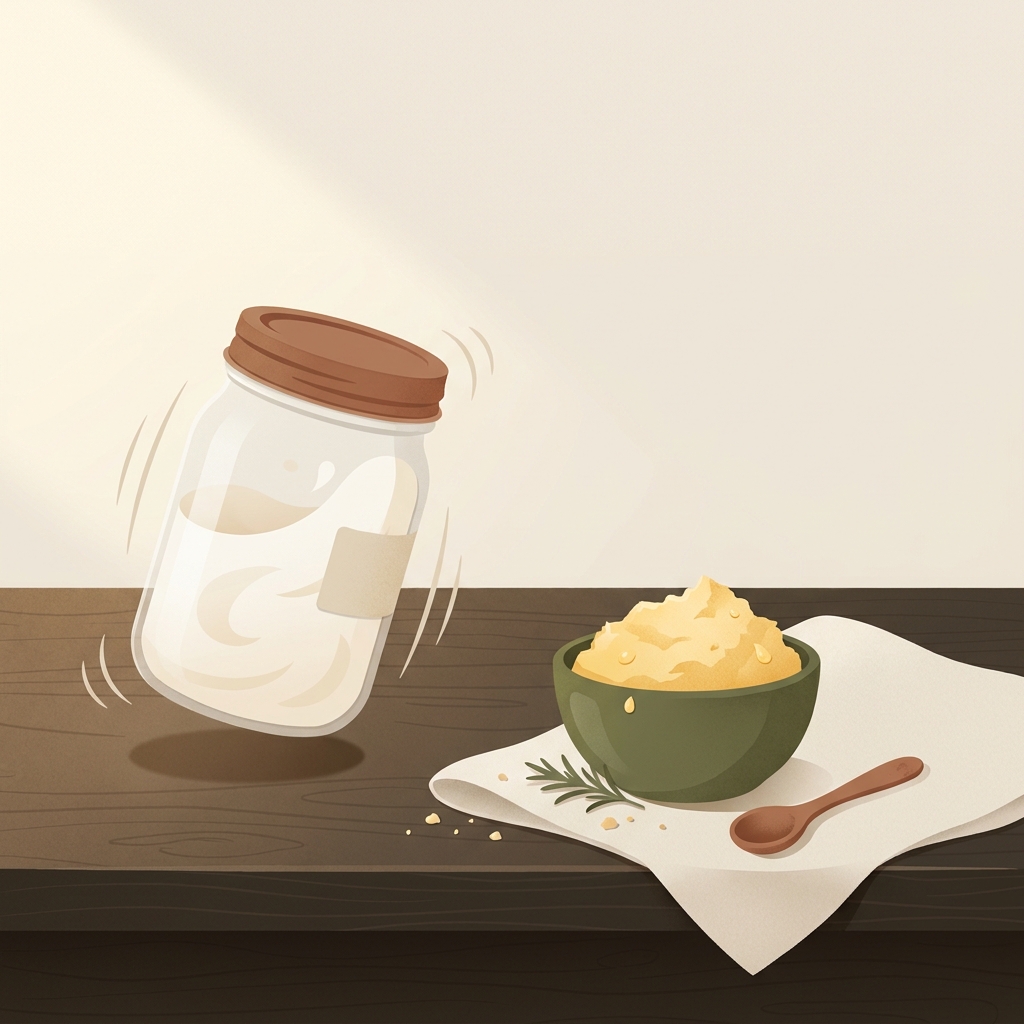
Shaking heavy cream in a sealed jar churns it into butter and buttermilk. That’s for making butter from cream, not for aerating finished butter. If you want to create butter from cream without equipment, try a jar-churn approach (In the Kitchen with Matt: Homemade butter in a jar). For whipping already-made butter lighter, use the hand-whisk method above.
Limits and when to switch tools
- Batch size: Hand-whipping is ideal for small amounts. For large quantities or ultra-consistent aeration, a mixer is more efficient.
- Temperature: Butter needs to be softened but not greasy for best aeration (see King Arthur Baking).
- Serving: Refrigerate flavored whipped butters. Soften briefly at room temperature before serving for easy spreading (Tutti Dolci honey butter).
Working with frostings? See our companion piece: Can you overmix buttercream? Practical fixes.
Hand-whipping butter: quick setup checklist
FAQ
Can I whip salted butter by hand? Yes. Salted and unsalted both whip; focus on proper softening so it traps air effectively (see texture cues in King Arthur Baking).
Can I start from cold butter? For best aeration by hand, soften first. Butter that’s too cold won’t expand and capture air well, leading to a dense texture (King Arthur Baking).

Related guides
Optional equipment for this guide
Hand mixing may be enough for a small suitable recipe. The butter condition and final texture matter more than buying a mixer.
As an Amazon Associate I earn from qualifying purchases. These are researched options, not hands-on test results. Check the exact size or model, current price and availability on Amazon.
| Product option | Fit and limits to check | Retailer |
|---|---|---|
| Product imageOXO Good Grips large wooden spoon | A sturdy wooden spoon for hand mixing softened butter in a manageable batch. Follow the recipe’s required texture and allow time; the spoon does not make cold butter cream quickly. | View on Amazon |